
How to Clean an Oven with Baking Soda and Vinegar
Deep clean baked-on grease and grime from your oven interior using a non-toxic baking soda paste and a white vinegar foaming spray reaction.
Let the oven cool, mix a thick baking soda paste with water, apply it away from elements and vents, leave it for several hours or overnight, then wipe and rinse thoroughly.
Watch: How to Clean an Oven With Baking Soda and Vinegar
Mix the paste, let it work, then lift the residue without scratching the enamel. · 3:14 minute walkthrough. The full written steps are below.
Let the baking soda do the work
The method works because the paste keeps the cleaner in contact with baked-on grease. Heat and aggressive mixing are not shortcuts.
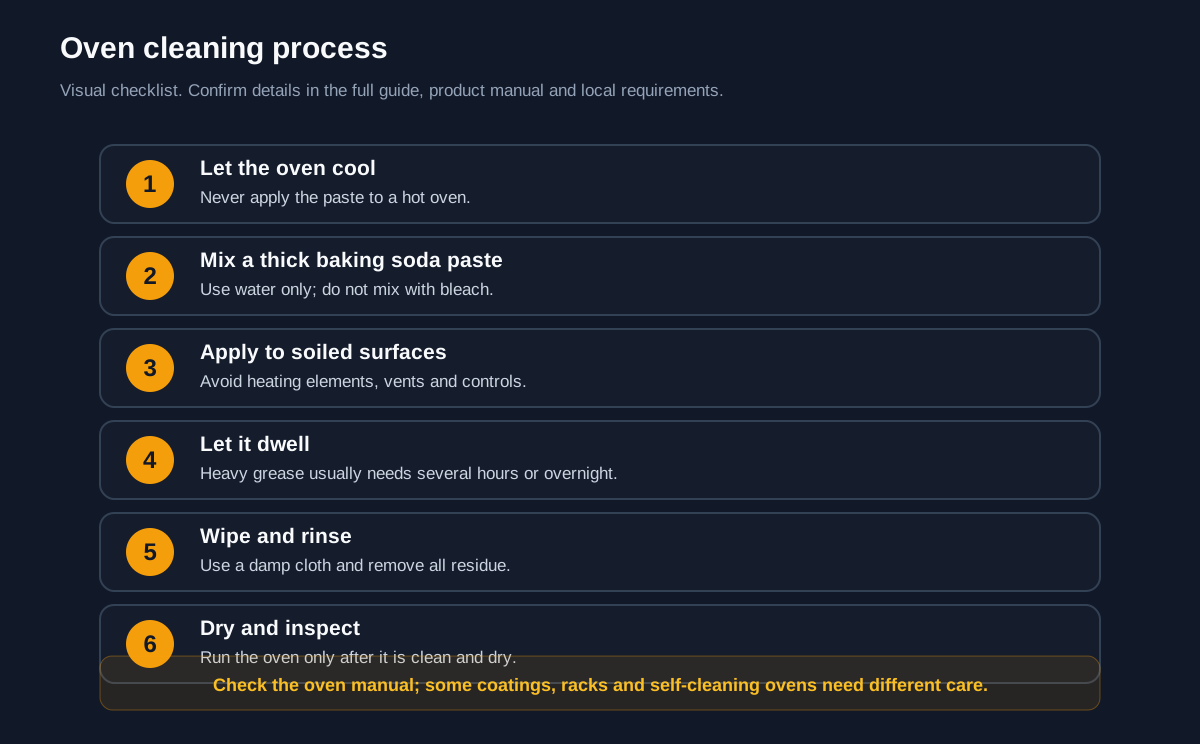
Before you start
- Wait until the oven is completely cool.
- Mix a thick paste with water only.
- Avoid elements, vents, controls and bare metal edges.
- Allow heavy grease several hours or overnight before wiping.
Common failure points
- Never mix baking soda with bleach.
- Do not apply paste to a hot oven.
- Check the manual for self-cleaning and coated surfaces.
Watch the original demonstration
See the source video before you start, then use the step checkpoints below as your field guide.
Play source video on YouTubeKeep learning
- Clean the Bottom of a PanUse the same paste method on cookware.
- Unclog a Kitchen SinkAnother household baking-soda routine.
- Clean a Gas GrillContinue with another grease-heavy appliance.
Visual step map
See the full sequence before you start, then check off each step as you go.
0 of 7 steps checked
Materials and cost planner
Select the items you plan to buy, adjust any estimated price, and calculate the selected total.
Editable rough U.S. retail estimates. Estimated all listed: $90.00. Prices are planning estimates, not quotes — tax, store, brand, size and quantity will change them.
Time and finish planner
Estimate active working time from the number of steps in this guide.
Room surface area calculator
Estimate the wall, ceiling and floor area of a room for planning cleaning time and supplies.
Subtract large fixtures or appliances that will not be cleaned. Never mix cleaning chemicals unless the manufacturer explicitly says it is safe.
- Read the tools, materials, safety notes, and steps below for free.
- Tap See 20-second demo if you want to understand it first.
- Tap Start Camera Coach when you want hands-free help, or Voice-only if you do not want to use the camera.
- Allow camera and microphone. Point your phone at the work; the coach watches your progress and tells you the next step.
🧰 Required Tools & Equipment
- ✓ Rubber cleaning gloves
- ✓ Spray bottle
- ✓ Plastic scraper or silicone spatula
- ✓ Microfiber cloths (3-4)
- ✓ Small mixing bowl
- ✓ Pastry brush or soft sponge
📦 Materials & Supplies
- ✓ Baking soda (1 cup)
- ✓ Distilled white vinegar (1 cup)
- ✓ Warm water
- ✓ Liquid dish soap
⚠️ Safety Checkpoints & Warnings
- • Confirm oven is completely switched off, unplugged/gas off if applicable, and stone-cold before starting.
- • Do not apply paste directly onto bare electric heating elements, gas igniters, or interior light fixtures.
- • Wear rubber gloves to prevent baking soda and vinegar from drying out or irritating skin.
📋 Step-by-Step Guide (7 Steps)
Clear the Oven Interior
Pull out all wire oven racks, thermometer probes, pizza stones, and foil drip liners. Set the racks aside in the sink or bathtub for separate soaking.
- • Empty oven cavity with bare floor, walls, and ceiling exposed
- • Oven racks placed entirely outside the appliance
- • Leaving the bottom rack inside and trying to work around it
- • Forgetting to remove temperature probes
Mix the Baking Soda Paste
Add 1/2 cup of baking soda to a small mixing bowl. Stir in 3 tablespoons of water gradually until it reaches a smooth, spreadable consistency similar to thick pancake batter or frosting.
- • Thick, white, lump-free paste in bowl that coats the back of a spoon without running freely
- • Adding too much water, making a runny liquid that slides off vertical walls
- • Leaving the paste too dry and chalky to spread smoothly
Apply Paste to Cavity Surfaces
Using a pastry brush, sponge, or gloved hands, spread the paste across all interior surfaces including back, sides, bottom, and glass door. Keep paste at least 1 inch clear of electric heating elements, gas burners, and thermostat sensors.
- • Even white/brownish coating covering dark baked-on stains across bottom and side walls
- • Clear gap around heating elements and gas ports
- • Smearing paste directly onto heating coils or gas burner openings
- • Spreading the paste too thinly over thick carbon spots
Allow Paste to Dwell Overnight
Close the oven door and leave the paste undisturbed for at least 8 to 12 hours (or overnight). The alkaline baking soda will break down hardened grease into water-soluble compounds.
- • Oven door closed with paste drying to a hardened crust on interior stains
- • Trying to wipe the paste off after only 15 minutes before grease has softened
Scrape and Wipe Dried Paste
Put on gloves, open the oven, and use a damp microfiber cloth along with a plastic scraper to remove the dried baking soda crust. Scrape gently at heavy deposits and wipe loose residue into a dustpan or trash bag.
- • Bulk of the crusty paste removed from floor and walls, revealing shiny enamel underneath
- • Piles of browned baking soda collected on the cloth or scraper
- • Using a metal scraper, steel wool, or wire brush that scratches porcelain enamel
- • Using a bone-dry cloth which creates abrasive dust
Spray Vinegar and Foam Away Residue
Fill a spray bottle with distilled white vinegar and mist all areas where baking soda film remains. Watch the vinegar react with the baking soda residue to create a gentle foaming action that lifts lingering grime.
- • Active white bubbling and fizzing on surfaces where vinegar meets residual baking soda
- • Spraying vinegar onto huge thick chunks of paste instead of wiping the bulk away first
- • Skipping corners and door seams
Final Wipe and Buff Dry
Rinse a clean microfiber cloth in warm water and wipe away all remaining foam, vinegar, and loosened grease. Finish by buffing the surfaces and glass door dry with a dry microfiber towel, then reinstall the clean racks.
- • Glossy, streak-free interior enamel and clear glass door with zero white powdery residue
- • Clean oven racks seated horizontally on side runners
- • Leaving wet vinegar residue to air dry, creating cloudy streaks on glass
Credit: inspired by an original tutorial by Home Insider — watch the original on YouTube.
Don’t have everything?
- No Plastic scraper? Old plastic gift card or silicone kitchen spatula
- No Spray bottle? Damp sponge dipped in vinegar and lightly squeezed over the surface
- No Pastry brush? Old toothbrush or gloved fingers
Frequently asked questions
How long should baking soda stay on the oven?
Light soil may loosen in a few hours. Heavy baked-on grease often needs overnight dwell time.
Can I put baking soda paste on the heating elements?
No. Avoid heating elements, vents, controls and other sensitive parts. Check the oven manufacturer instructions.
Can I mix baking soda with bleach?
Never mix baking soda with bleach. Use water only, and never combine cleaning chemicals unless the manufacturer explicitly instructs it.
Does vinegar clean the oven?
Vinegar can help remove residue after the baking soda paste, but it does not replace the paste and dwell time for heavy grease.